Posts

Showing posts with the label Security

What Makes a Good Threat Model?

Image
 In the realm of cybersecurity, threat modeling plays a pivotal role in safeguarding systems and applications against potential risks. A well-constructed threat model provides valuable insights into vulnerabilities, attack vectors, and mitigation strategies. Let’s delve into what distinguishes a good threat model from a subpar one. Selecting the approach 1. Picking the right tool:  Selecting an appropriate tool for threat modeling is crucial in ensuring effective security analysis. In this article we will use the Microsoft Threat Modeling tool. Key consideration including  a. Scope: Consider tools that align with your scope—some cater to web applications, while others cover broader infrastructure. b. Ease of Use: Opt for tools that strike a balance between robustness and simplicity. Complex tools may overwhelm users, hindering adoption. Look for intuitive interfaces and clear documentation. c. Methodology Compatibility: Different threat modeling methodologies exist ...

What is the Security Threat Landscape in 2024?

Image
 I was working up a question that I thought would make a great blog. the question is in 2024 what is the the security threats landscape? Here's the key take aways that I considered. Proactive Mindset : Today’s threat landscape demands a proactive mindset. Organizations are moving away from reactive security measures and are instead focusing on identifying potential intrusion points and actors before an incident occurs . Cyber Threats evolving : Cyber threats are leveraging AI, exploiting vulnerabilities in mobile and cloud platforms, and targeting data breaches. The rise of connected cars has led to concerns about automotive hacking. Ransomware attacks have become more sophisticated, causing significant damage to organizations. The proliferation of IoT devices on a 5G network presents new security challenges. As systems become more integrated and automated, they also become more vulnerable to cyber threats.  Remote Work and Digitization : The rush to adapt to pandemic-inspired...

2020 predictions

Image
2020 is coming upon us, and it's time to reflect on my 2019 predictions I made, and look forward to this coming year with another technology prediction. So let's get started - first off - a lookback to see  progress in the areas I outlined, possibly no earth shattering results, but progress.  2019 retrospective - New UX - probably not as much evolution as I would have wanted to see in this area. For now, we use windows, android, IOS, and it's pretty much the same UX as it's been for a while. IoT the simple assistant - IoT continues to be the hot area of growth. I consider this more evolution than revolution. As we see IoT based technology being embedded into more and more devices. Cloud growth advances in   astonishing speeds - This past year all three cloud providers made strides in the cloud worth noticing.  AWS entered the quantum computing market with Bracket, introduced an in-house...

Deploying AI/ML in the cloud securely

Image
Last month I finished a project with the Azure team that involved building a secure PaaS based solution that provides a step by step guidance and automation to allow researcher to be able to use Machine Learning to run scientific experiment securely. Key thing here is that it's built to be /Secure/ Problem Most times when a traditional experiments are run, an experimenter or researcher starts with a data set they got their hands on, and uses tools such as Jupyter notebook to create an R or Python based experiment. Frequently this experiment is using a simple data science VM or a workstation. The scientist will then run the experiment (which maybe computationally intense) and turn to a cloud solutions to score the experiment in Google or Azure, and finally run Tableau or PowerBI or Excel for visualization. Since researchers are not security experts and do not think that what they are working on should consider their work as possibly sensitive they may expose their work...

Securing the cloud using PaaS services

Image
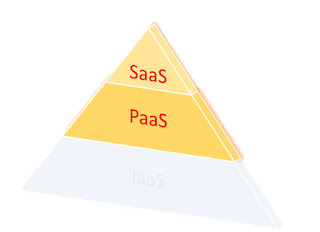
I've been asked several times as to what are the building blocks to build a secure cloud solution. In my last 2017 blog I revisit the paper I wrote a while back called " 13 Effective Security Controls for ISO 27001 Compliance " and reconsider the 13 security measure that help meet compliance controls. One important update for this blog over the paper, is that I will not look at IaaS services a whole lot. Protecting a OS or VM has been done to death.   IMHO organizations need to get out of the business of managing the health of OS's/VM's and WebServices.  Moving to Containers with an orchestration engines such as Kubernetes , or Platform such as provided by Azure, or AWS is one of the best long term security investments. No more AV, Patching, or Host services maintenance…  The process is to get most companies away from the IT business, and into their core competency with a High tech offering that provide a capability on demand. Moving...

Building a threat model for a PaaS based Cloud service

A while back I worked with a great Architect general guru of secure code. Adam Shostack who is a foremost expert when it comes to threat modeling . He does a great job in help educate us all in how you should plan a secure solution before you build it. A threat model should be seen as a key design element before code is started, similar to a floor plan in a house design. In this blog I wanted to illustrate the value and methods required to build a threat model, and tie it back to work I recently published, Payment Processing Blueprint for PCI DSS-compliant environments which included sample threat model for a cloud based PaaS solution. Wow, that’s great a free starter threat model to an architecture, what else can you ask for? What does it take to create your very own threat model? Think like an attacker, it’s important to see the problem from the attackers point of view when designing, or architecting a solution. For instance that includes thin...